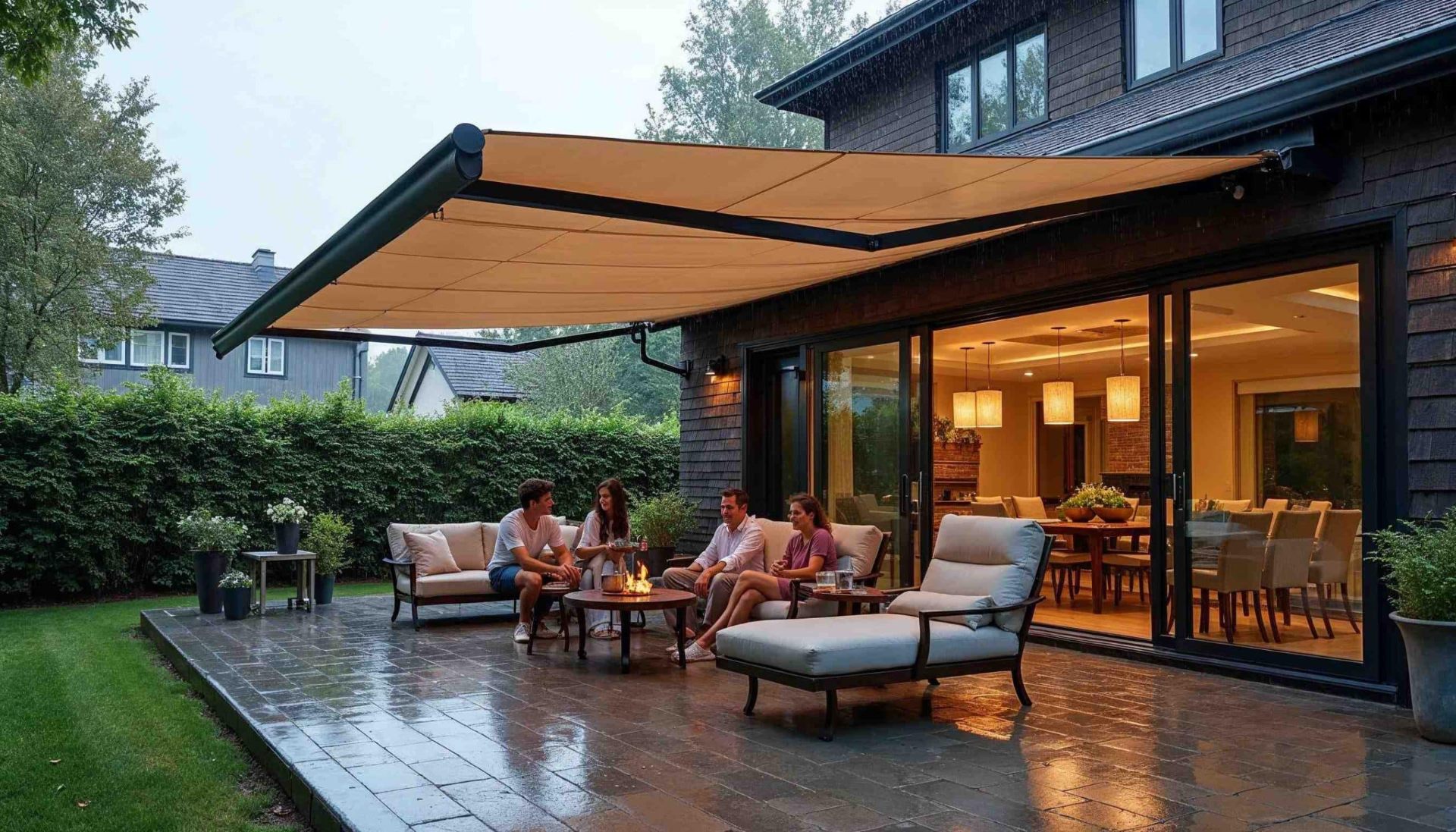
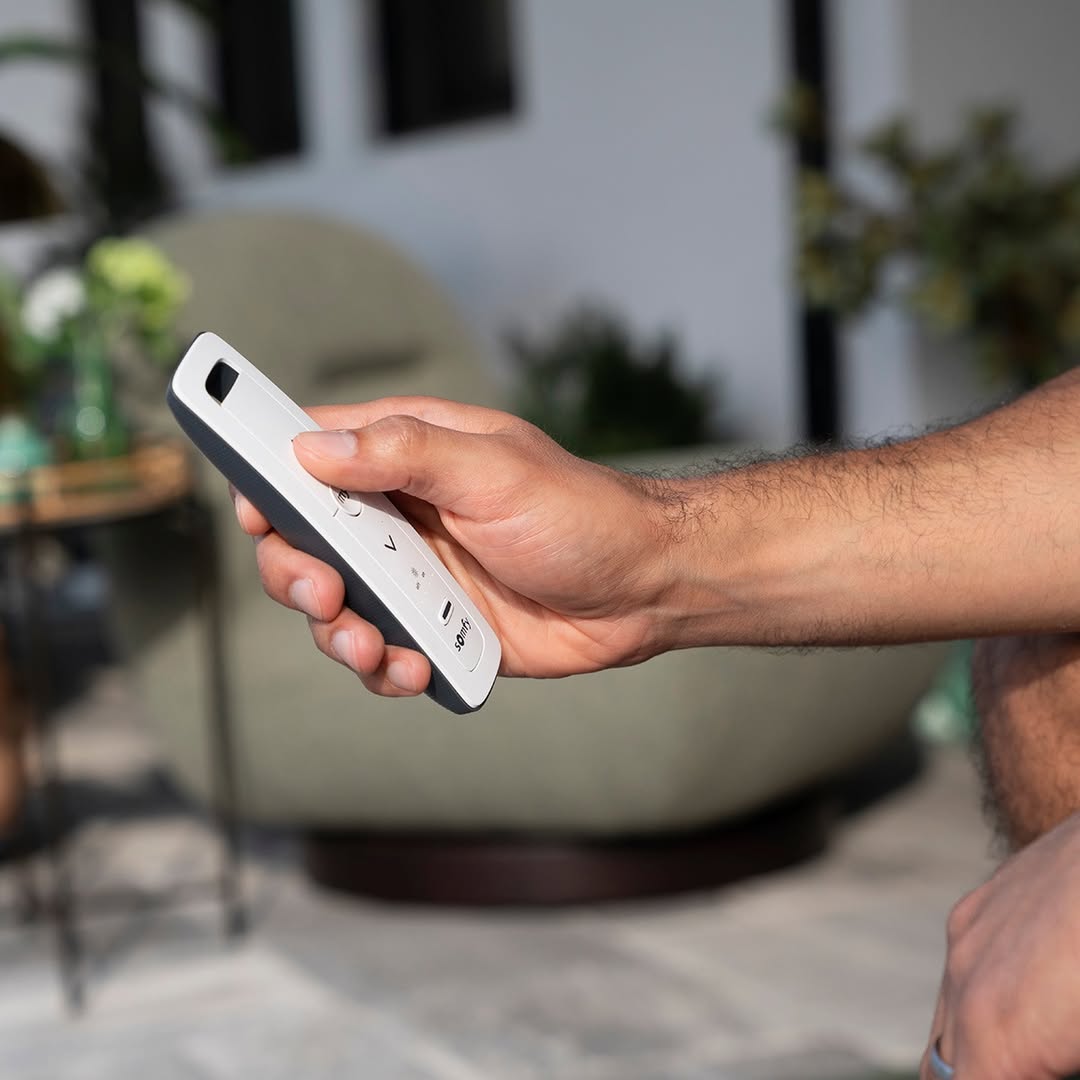
On every survey we do, the same question comes up early: should I go for a motorised awning or a manual one? It's a fair question - the frame, fabric and fixings can be identical, but the operation changes the day-to-day experience (and the price) more than most people expect.
This guide is our honest, side-by-side comparison. No sales pitch: we install both, we quote both, and we'll happily walk you through the trade-offs before you decide.
The short answer
- Motorised (electric) is the right choice for around 90% of the projects we quote today. It's genuinely more convenient, it enables the safety sensors that protect the awning, and the cost gap has narrowed sharply over the last few years.
- Manual (hand-crank) still makes perfect sense when there's no easy power route, when the awning is small and rarely used, or when budget is the primary driver.
Everything below is what informs that recommendation on a case-by-case basis.
How each one actually works
Manual awnings
A manual awning is opened and closed with a hand crank - a detachable winder that hooks into a gear at one end of the cassette. A few turns clockwise extends the arms; a few turns anti-clockwise pulls them back. The mechanism is entirely mechanical: no motor, no wiring, no receiver.
What you get:
- Simple, mechanical reliability - few things to go wrong.
- No electrics, so no dedicated power supply needed at installation.
- Lowest upfront cost.
What you give up:
- Every use is a physical task. A 4-5m awning takes 30-60 seconds of steady cranking to fully deploy or retract.
- Somewhere to store the crank handle.
- All the automation: no sensors, no remotes, no timers, no smart-home integration.
Motorised (electric) awnings
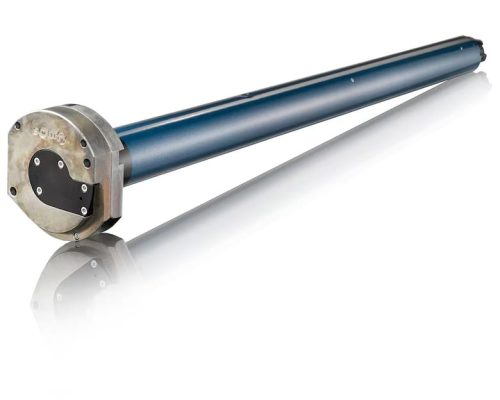
A motorised awning has a slim tubular motor hidden inside the roller tube. It draws mains power through a small cable that we run into the cassette during installation. You control the motor with a handheld remote, a wall switch, or (with the right receiver) a sensor or smartphone app.
What you get:
- Deployment in 10-20 seconds at the press of a button - from indoors, outside or from another room.
- Compatibility with sun, wind and rain sensors that protect the awning automatically.
- Smart-home integration if you want it (Somfy TaHoma is the standard on Aura installs).
- No stooping, cranking, or storing a handle.
What you give up:
- A modest cost premium for the motor, receiver, controls and electrical work.
- A power supply must exist within cable reach of the awning (we plan this at survey stage).
Side-by-side comparison
| Manual | Motorised | |
|---|---|---|
| Upfront cost | Lowest | Modest premium |
| Time to open/close | 30-60 seconds of cranking | 10-20 seconds, no effort |
| Power supply required | No | Yes - fused spur near the cassette |
| Sensors (sun/wind/rain) | Not compatible | Fully supported |
| Smart-home / app control | No | Yes (TaHoma) |
| Practical max width | Around 4-4.5m before cranking gets heavy | Up to the full span the frame supports |
| Ideal user | Occasional use, small terrace, no power route | Regular use, larger spans, any commercial site |
| Long-term maintenance | Occasional gear service | Motor is sealed; typically maintenance-free |
| Warranty (Aura spec) | 5 years on frame | 5 years on frame and Somfy motor |
Why motorisation is more than "just easier"
Ease of use is the headline benefit, but it's not the biggest one. The real advantage of a motorised awning is that it unlocks sensor-driven protection for the whole system.
Wind sensors
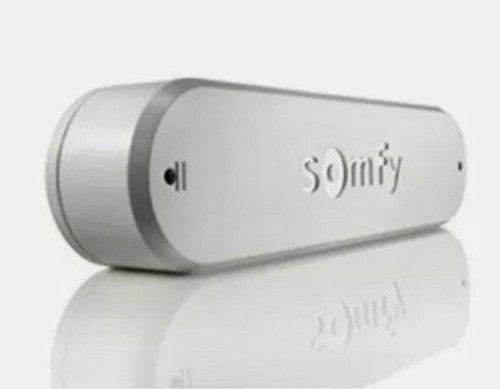
An awning left extended in a strong gust is the single most common cause of awning damage in the UK. A wind sensor (Somfy Eolis, or the combined Soliris) monitors the wind speed at the cassette and automatically retracts the awning above a preset threshold - even when you're not home.
On a manual awning, this isn't possible: you have to be there, notice the weather, and crank it in yourself. That's fine if you're always at home; it's a real problem if you're not.
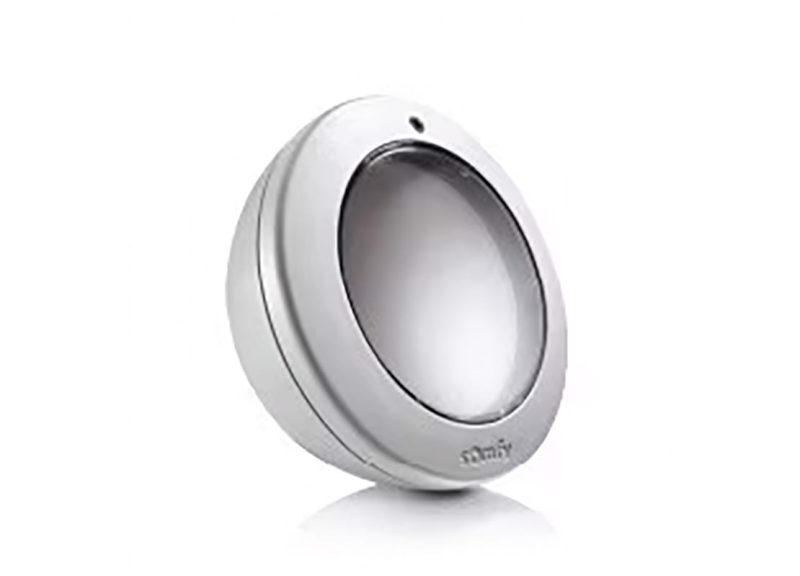
Sun sensors
A sun sensor (Somfy Sunis) extends the awning automatically when solar radiation crosses a threshold and pulls it back in when the sun drops. Combined with a wind sensor, the awning quietly manages itself day-to-day - opening on hot afternoons to shade your interior, retracting in the evening or if the weather turns.
This is where the operating cost of a motorised awning actually goes negative for a lot of customers: lower cooling bills in summer because the interior stays 3-5°C cooler when the awning shades south-facing glass.
Rain sensors
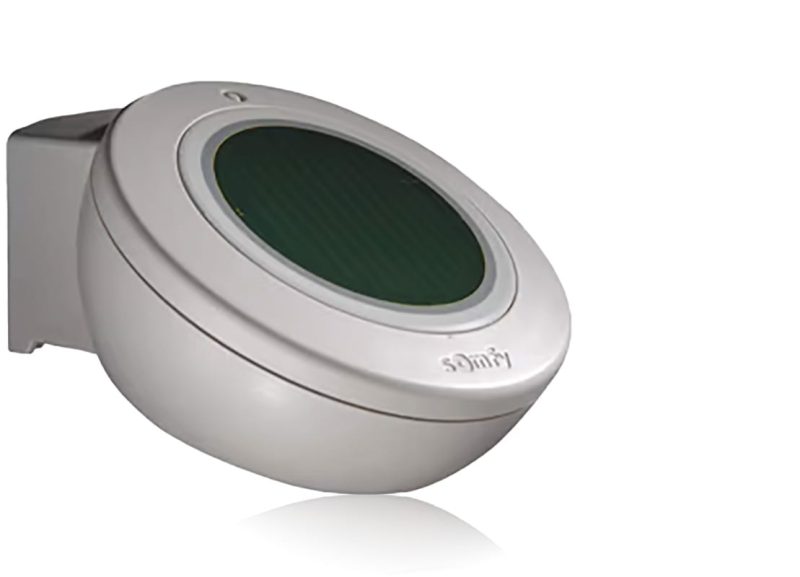
A rain sensor (Somfy Ondeis) detects the first drops on the sensor pad and automatically retracts the awning, protecting the fabric from prolonged wet exposure and preventing water from pooling in the pitch.
Control options
On a Somfy-motorised Aura awning you can pick any combination of:
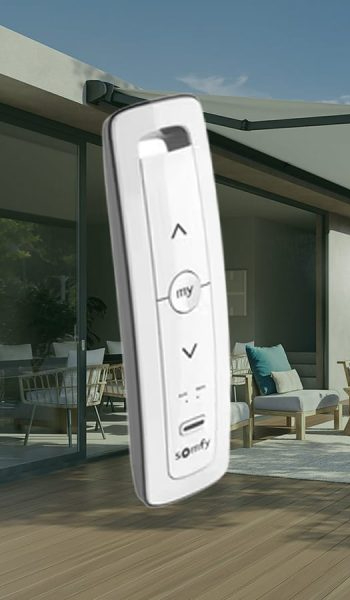
- Situo handheld remote - single-channel for one awning, or 5-channel to control several from one remote.
- Smoove IO wall switch - flush or surface-fit, sits neatly by a patio door.
- TaHoma smart hub - app control, scheduled scenes, integration with lights, blinds and heating.
- Voice control via Alexa or Google Home when paired with TaHoma.
What about the electrical work?
This is where a lot of customers assume motorisation is more disruptive than it actually is. In practice:
- We need a switched fused spur on a 3-amp circuit within about 1m of one end of the cassette.
- A competent electrician can install this in a couple of hours on most homes - often on the same day as the awning.
- If the wall behind the awning is an interior party wall, cable routing is usually straightforward. If it's a solid rendered external wall, we plan the route at survey stage.
- On new-builds or renovations we specify the spur position during first-fix so it's already in place before the awning arrives.
We survey every property in person specifically so we can plan this properly before quoting.
When a manual awning is genuinely the right call
Motorisation isn't automatically the answer. Manual makes real sense when:
- There's no viable power route. A detached garden building, a listed wall you can't chase into, or an install where running a spur would cost more than the motor upgrade itself.
- The awning is small and rarely deployed. A 2.5-3m awning over a compact patio, used a handful of times a year, doesn't really benefit from a motor.
- Budget is the primary driver. If the choice is between a premium manual awning and a cheap motorised one, we'll always specify the better frame and fabric with a manual crank. Quality of the base product matters more than the operation.
- The user prefers a fully mechanical product. Some customers simply don't want another connected device in the garden. That's a valid preference.
In each of these cases we're still installing the same premium Aura frame, the same Dickson solution-dyed fabric and the same fixings - just with a hand crank instead of a motor.
What we recommend and why
For a typical Aura customer - a UK homeowner installing a 3.5-5.5m folding-arm awning over a rear terrace they'll use regularly through spring, summer and autumn - we recommend:
- Somfy Sunea tubular motor (5-year warranty).
- Situo handheld remote as the primary control.
- Smoove IO wall switch by the patio door as a secondary control.
- Soliris IO sun and wind sensor for automatic operation and gust protection.
- Optional TaHoma smart hub for app and voice control if the household is already on a smart-home platform.
That package sits at a modest premium over the entry-level manual spec and it's usually the right long-term buy. The motor is invisible, the sensors do their job in the background, and the awning quietly becomes a piece of infrastructure rather than a chore.
See the full Somfy motorisation options on our Our Range page.
Common questions
Can I add a motor to a manual awning later? Sometimes, depending on the model, but it's more expensive than specifying it at build. If there's any chance you'll want motorisation in future, do it now.
What happens in a power cut? The awning stays where it is. Modern motors don't fail into a dangerous state - if it's extended, it stays extended until power returns. Sensors that need power obviously pause until then, so retract the awning manually via override if a big storm is coming.
Are motorised awnings noisy? No. A Somfy Sunea motor is quieter than a normal conversation - you'll hear the fabric rolling and the arms clicking into place, but not the motor itself.
How long do the motors last? Somfy publish an expected lifespan well beyond the 5-year warranty. In practice, we very rarely replace one within the life of the awning.
Ready to price both options?
Our estimate flow prices out both a manual and a motorised version of the same spec so you can see the real cost difference for your project.
Start your estimate in under a minute or book a free on-site survey and we'll walk you through the operation options in person.
The Complete Guide to Awning Fabrics & Materials
Thinking about an awning of your own?
Get a transparent, tailored estimate in under a minute - no obligation.